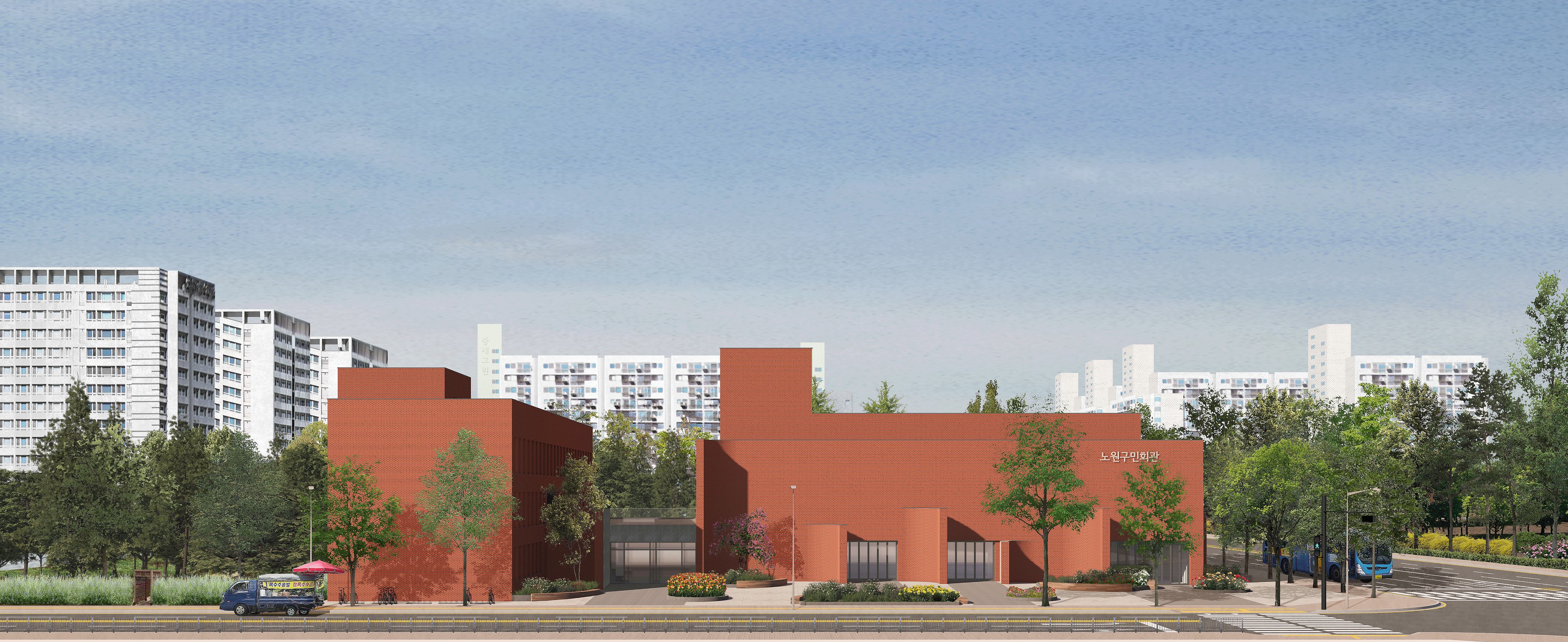
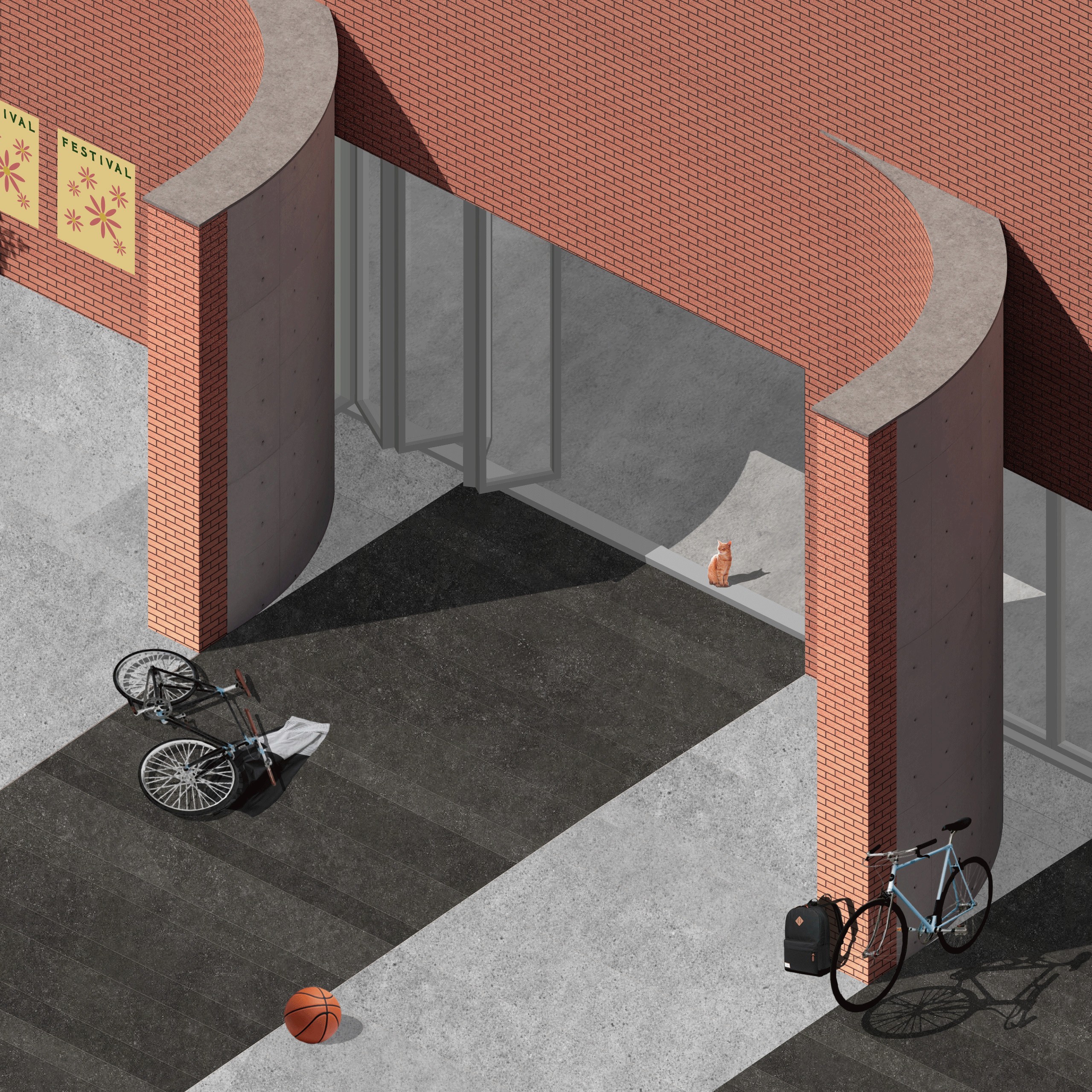
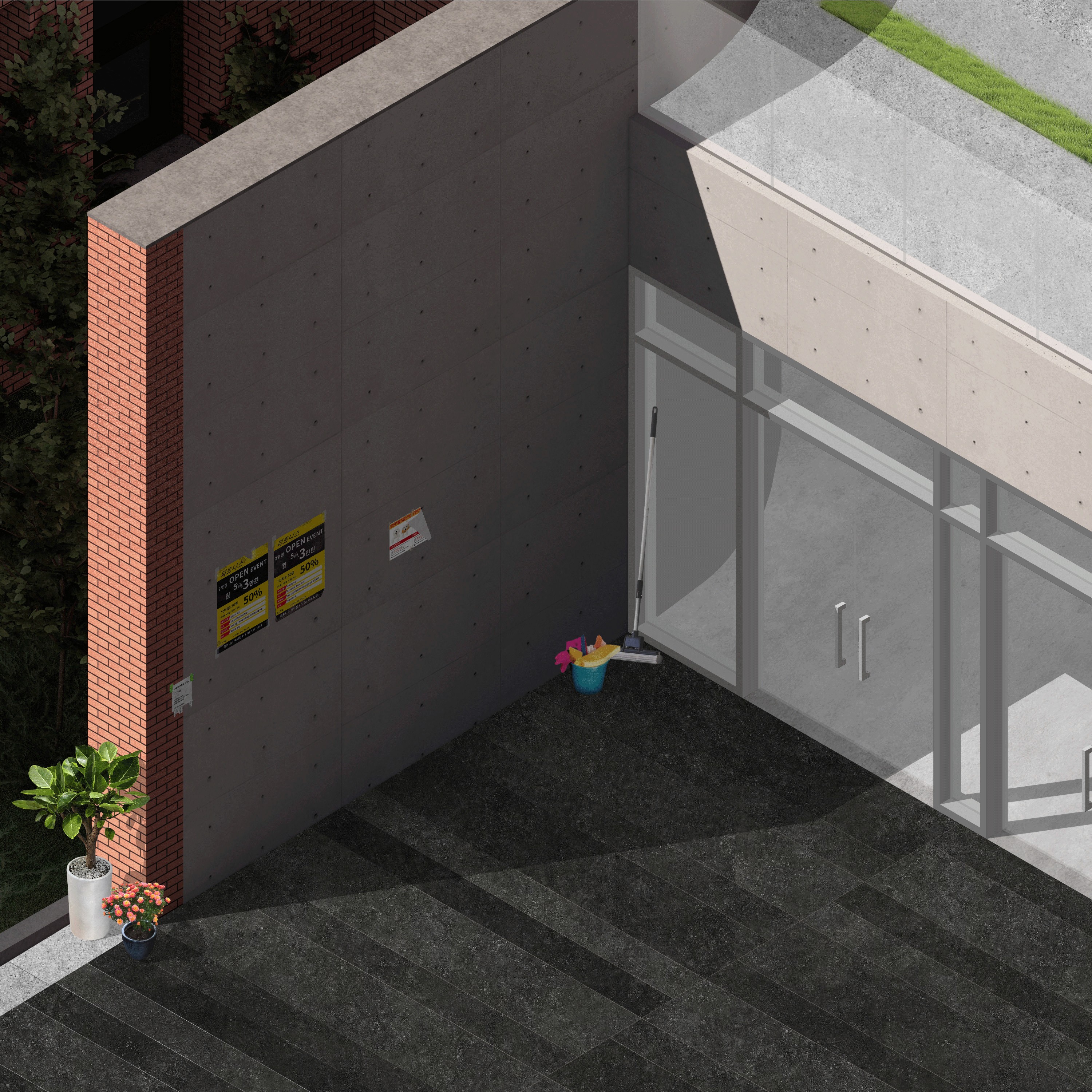
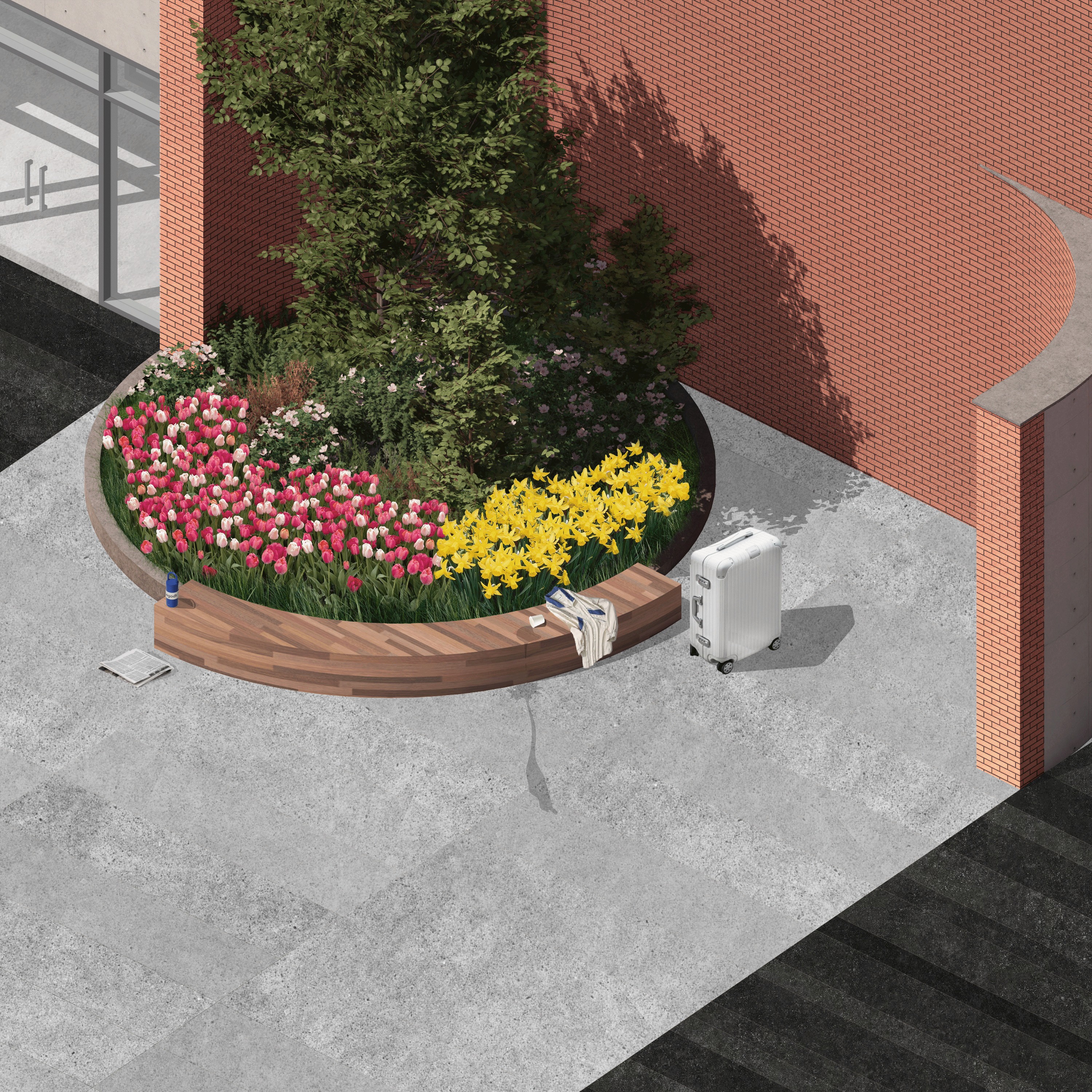
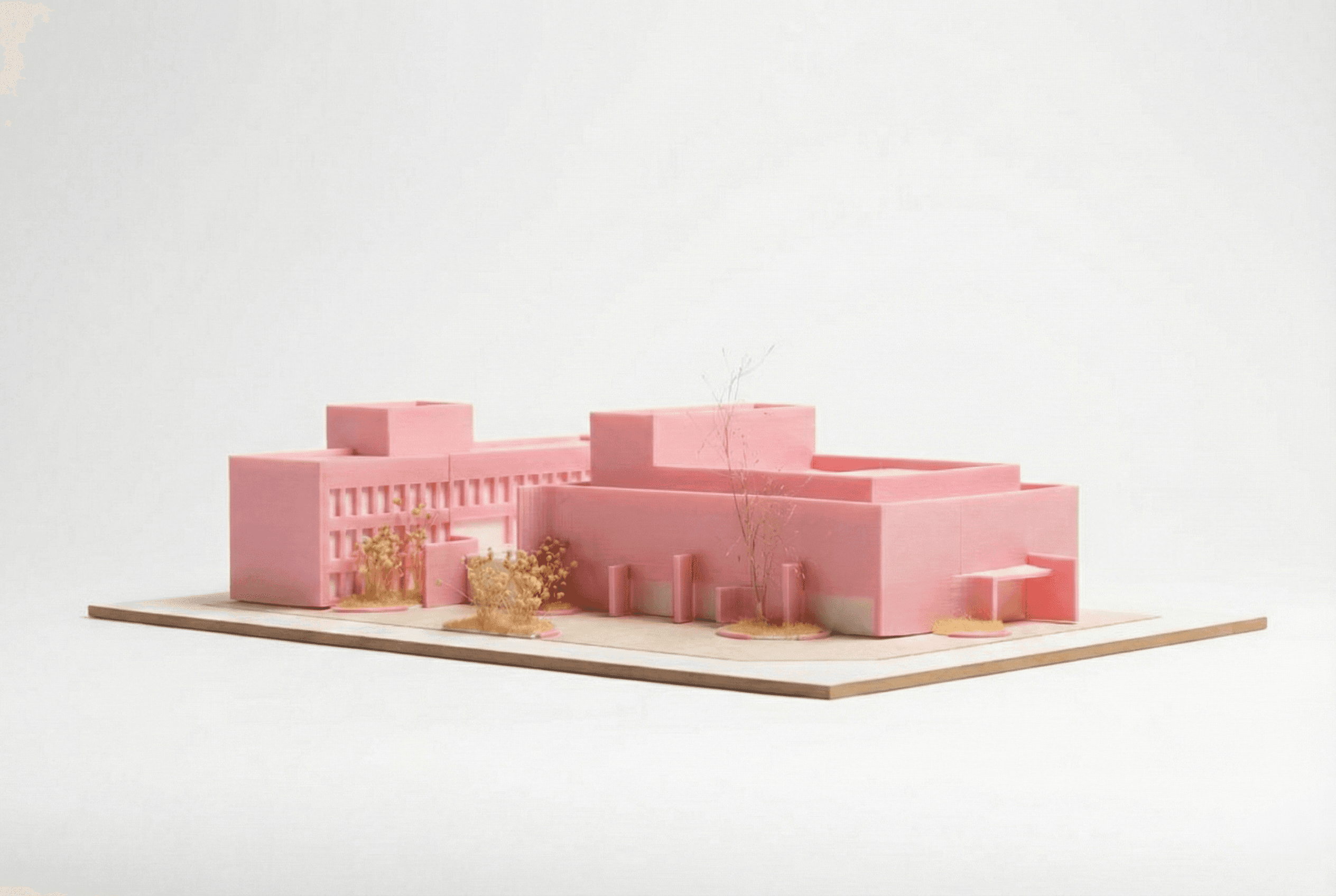
Within the campus of Seoul National University, this project reinterprets an underutilized space by proposing a secondhand store that combines the operational logic of a permanent retail shop with the flexibility of a pop-up format. Rather than merely inserting a commercial program, the intervention activates latent spatial potential within the campus fabric and introduces a new layer to everyday circulation.


Unlike conventional secondhand stores that rely on dense, quantity-driven displays, this project centers on narrative. Each object is treated not simply as merchandise, but as a medium carrying time, memory, and prior use. The space therefore operates as a restrained backdrop that quietly frames and reveals these stories. Excessive accumulation is avoided in favor of a simple display strategy that carefully calibrates void and density.


Furniture and display elements are structurally adaptable yet visually restrained. This approach accommodates both the variability of pop-up programming and the stability of a permanent store. Modular fixtures and movable components allow reconfiguration according to curatorial and operational needs, generating an evolving spatial rhythm.


Ultimately, the store functions less as a site of consumption and more as a platform for circulation and recontextualization. Within the intellectual environment of the campus, objects encounter new users and acquire renewed narratives, while the architecture serves as a disciplined device that frames this ongoing process.

서울대학교 캠퍼스 내 유휴 공간을 재해석하여, 기존 상설 매장과 팝업 매장의 운영 방식을 결합한 새로운 유형의 중고 매장을 제안한다. 이는 단순한 리테일 프로그램의 삽입이 아니라, 캠퍼스 내부의 잠재된 공간을 활성화하고 일상적 동선에 새로운 층위를 더하는 공간적 개입이다.


일반적인 중고 매장이 물량 중심의 진열 방식을 취하는 것과 달리, 이 프로젝트는 ‘이야기’를 중심으로 한 전시적 구성을 지향한다. 각 물건은 단순한 상품이 아니라 시간과 기억을 내포한 매개체로 다루어지며, 공간은 그것을 조용히 드러내는 배경으로 작동한다. 이를 위해 과도한 적층 진열을 지양하고, 여백과 밀도를 조율한 간결한 디스플레이 시스템을 도입하였다.


가구와 진열 요소는 구조적으로는 유연하되 시각적으로는 절제된 언어를 유지한다. 이는 팝업 프로그램의 가변성과 상설 매장의 안정성을 동시에 수용하기 위한 전략이다. 모듈화된 진열대와 이동 가능한 요소들은 운영 방식에 따라 재구성될 수 있으며, 그 자체가 공간의 리듬을 형성한다.


결과적으로 이 중고 매장은 소비의 공간이라기보다, 순환과 재맥락화의 플랫폼으로 기능한다. 캠퍼스라는 지적 환경 속에서 물건은 새로운 사용자를 만나며 또 다른 서사를 획득하고, 공간은 그 과정을 담아내는 절제된 장치가 된다.

서울대학교 캠퍼스 내 유휴 공간을 재해석하여, 기존 상설 매장과 팝업 매장의 운영 방식을 결합한 새로운 유형의 중고 매장을 제안한다. 이는 단순한 리테일 프로그램의 삽입이 아니라, 캠퍼스 내부의 잠재된 공간을 활성화하고 일상적 동선에 새로운 층위를 더하는 공간적 개입이다.


일반적인 중고 매장이 물량 중심의 진열 방식을 취하는 것과 달리, 이 프로젝트는 ‘이야기’를 중심으로 한 전시적 구성을 지향한다. 각 물건은 단순한 상품이 아니라 시간과 기억을 내포한 매개체로 다루어지며, 공간은 그것을 조용히 드러내는 배경으로 작동한다. 이를 위해 과도한 적층 진열을 지양하고, 여백과 밀도를 조율한 간결한 디스플레이 시스템을 도입하였다.


가구와 진열 요소는 구조적으로는 유연하되 시각적으로는 절제된 언어를 유지한다. 이는 팝업 프로그램의 가변성과 상설 매장의 안정성을 동시에 수용하기 위한 전략이다. 모듈화된 진열대와 이동 가능한 요소들은 운영 방식에 따라 재구성될 수 있으며, 그 자체가 공간의 리듬을 형성한다.


결과적으로 이 중고 매장은 소비의 공간이라기보다, 순환과 재맥락화의 플랫폼으로 기능한다. 캠퍼스라는 지적 환경 속에서 물건은 새로운 사용자를 만나며 또 다른 서사를 획득하고, 공간은 그 과정을 담아내는 절제된 장치가 된다.

LOCATION

Seoul National University, Seoul


STATUS

Completed, 2014


CLIENT

M.I.U (Market IN U)


BUILDING AREA

000㎡


SITE AREA

000㎡


TEAM

Architect : Ondo Project Architects

Collaborator : Shin Hyejung Interior Design


PHOTOGRAPHY

Kyungsub Shin


LOCATION

Seoul National University, Seoul


STATUS

Completed, 2014


CLIENT

M.I.U (Market IN U)


BUILDING AREA

000㎡


SITE AREA

000㎡


TEAM

Architect : Ondo Project Architects

Collaborator : Shin Hyejung Interior Design


PHOTOGRAPHY

Kyungsub Shin